Recharging the Movement: Healthy Building Policy Summit Fuels the Next Wave of Action
With voices from policy, industry and public health, IWBI and Georgetown convened leaders to explore how policy and actionable strategies can drive healthier buildings and communities

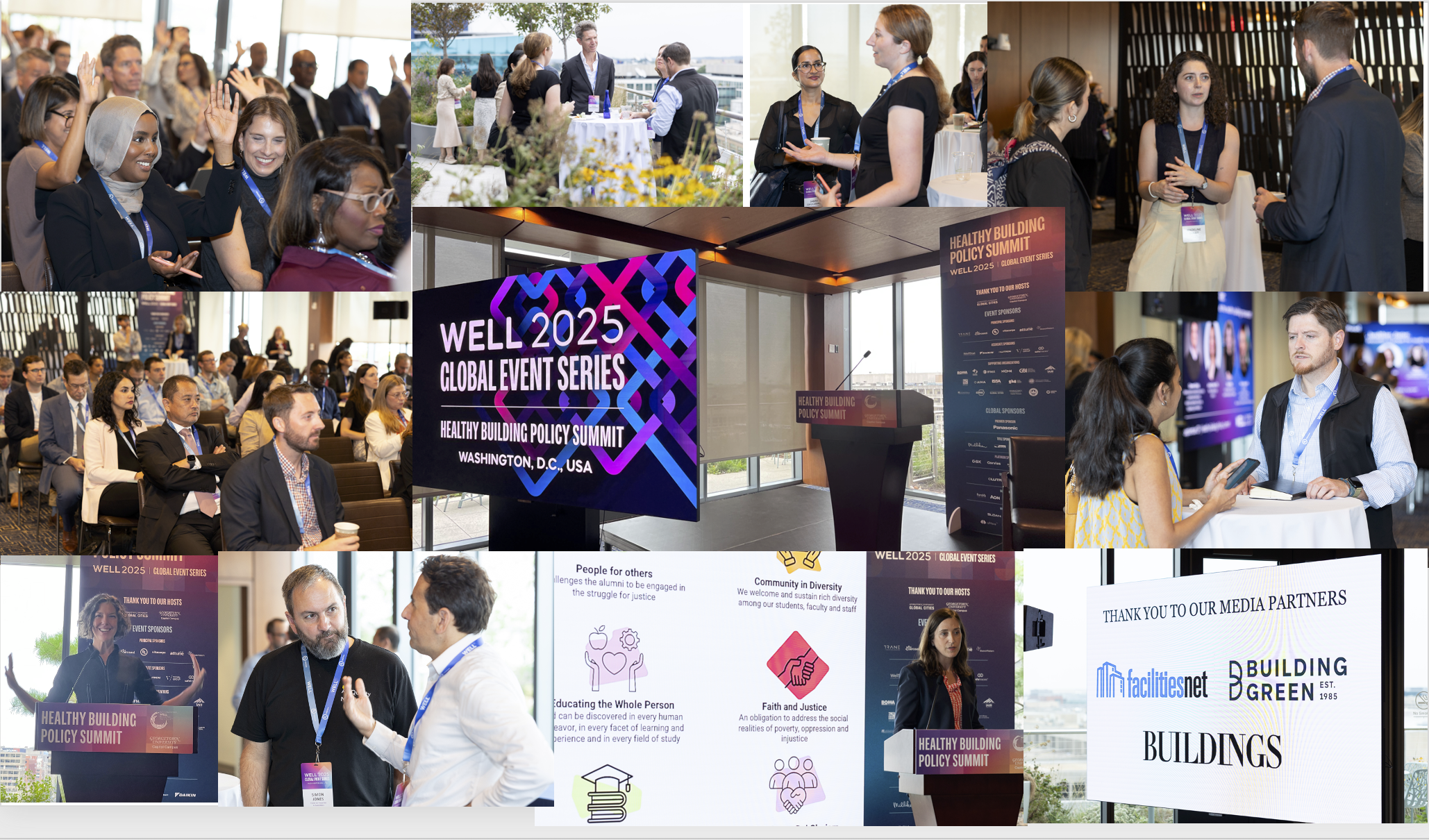
IWBI’s 2025 Healthy Building Policy Summit, the second annual convening, hosted by Georgetown University, was a day of collaboration, energy and big ideas. Leaders and practitioners in healthy building and sustainability, policymakers, designers, researchers and advocates joined together for a dynamic day of discussions that focused on ways to rethink how the places we live, work and gather can better support health, well-being and community resilience.
Through the summit’s plenary and panel sessions, speakers offered insights, and shared experiences, reminding everyone that creating healthier and more resilient spaces is a shared responsibility and a powerful opportunity to improve lives. The event also highlighted the latest thinking, research, opportunities and innovations in healthy buildings and called for policy improvements to scale best practices at every level of government. Each session offered attendees fresh perspectives and actionable insights, inspiring new strategies to advance health, well-being and resilience in our buildings.
A keynote to remember: the healthy building agenda is an imperative.
In his powerful keynote, “Four Environments, One Truth,” former U.S. Surgeon General Dr. Richard Carmona told the audience that “the environment is never neutral — it either sustains us or harms us.”
Drawing on his experiences in four different roles that he’s held from the battlefield to the emergency room, he illustrated how air, light, sound and safety profoundly shape human health at every level. Dr. Carmona called for a united movement to design and operate buildings that are not only healthy, but also resilient and secure, emphasizing that investing in health through the built environment is a health, financial and moral imperative.

Another opening speaker, Dr. Christopher King, Dean of Georgetown University’s School of Health, also underscored the real and far-reaching health consequences of poor indoor environments and the need for collective action to ensure healthier spaces for all. He emphasized that policy and partnerships are essential to transform innovation into impact.

Jason Hartke, IWBI Executive Vice President of Global Advocacy, emphasized that the world is increasingly recognizing the critical role of healthy buildings and is actively pursuing opportunities to transform the spaces where people live, work, and gather. He framed this as a pivotal moment that we should recognize, calling attention to the urgency and potential for meaningful change in the built environment.

A national opportunity for action: unlocking policy solutions to accelerate healthy indoor air
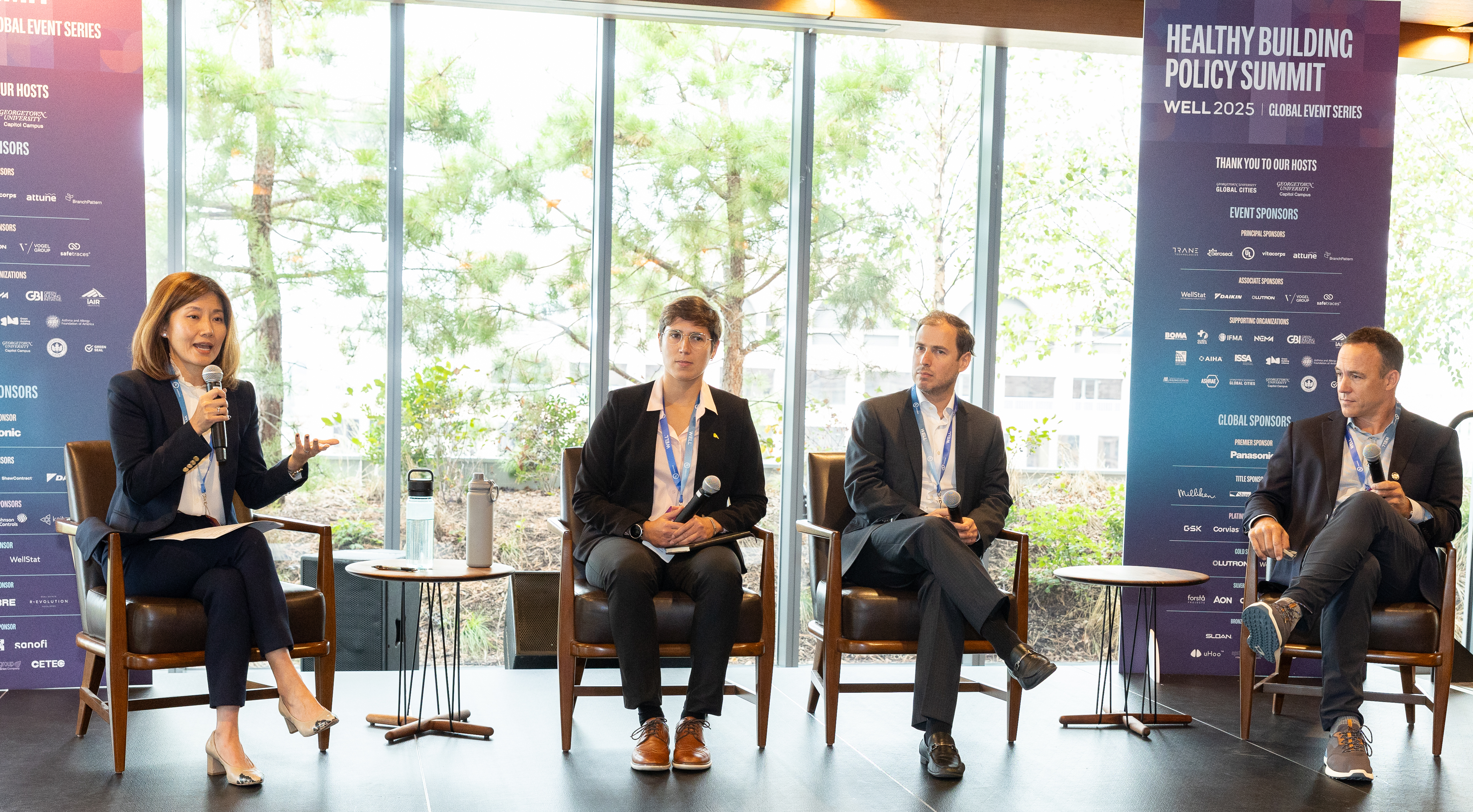
In this session, experts delved into the topic of indoor air quality (IAQ), acknowledging that poor IAQ represents a pervasive public health crisis and exploring pathways for more urgent, coordinated action. Moderated by Nora Wang Esram, Ph.D., CEO of the New Buildings Institute, the panel brought together Georgia Lagoudas, Ph.D., of Brown University School of Public Health, Sean McCrady of UL and Jonathan Gritz of WellStat for a powerful discussion on how policy, technology and market forces can come together to make clean indoor air a basic human right. The speakers pointed out that meaningful progress requires alignment across leadership, incentives and enforcement, going beyond awareness to efforts that ensure real accountability. Drawing from global examples, they highlighted practical steps such as deploying affordable sensors, addressing landlord-tenant barriers and integrating indoor air quality into broader sustainability and climate agendas. The discussion closed with a collective call to action: measure, manage and demand healthy indoor air in every building, because indoor air quality is a public health essential, not optional.
Investing in health pays back: lessons from the field
Moderated by Whitney Austin Gray, Ph.D., from IWBI, this panel brought together Denise Hauck of Corvias, Susan Chung, Ph.D., of HKS, and Serene Almomen, Ph.D., of Attune to explore how health-focused investments in buildings deliver measurable impact across housing, workplaces and schools. Hauck shared how Corvias’ pilot of WELL for residential led to clear resident benefits, including improved air and water quality and greater overall satisfaction. She also highlighted plans to scale these results to thousands more homes.
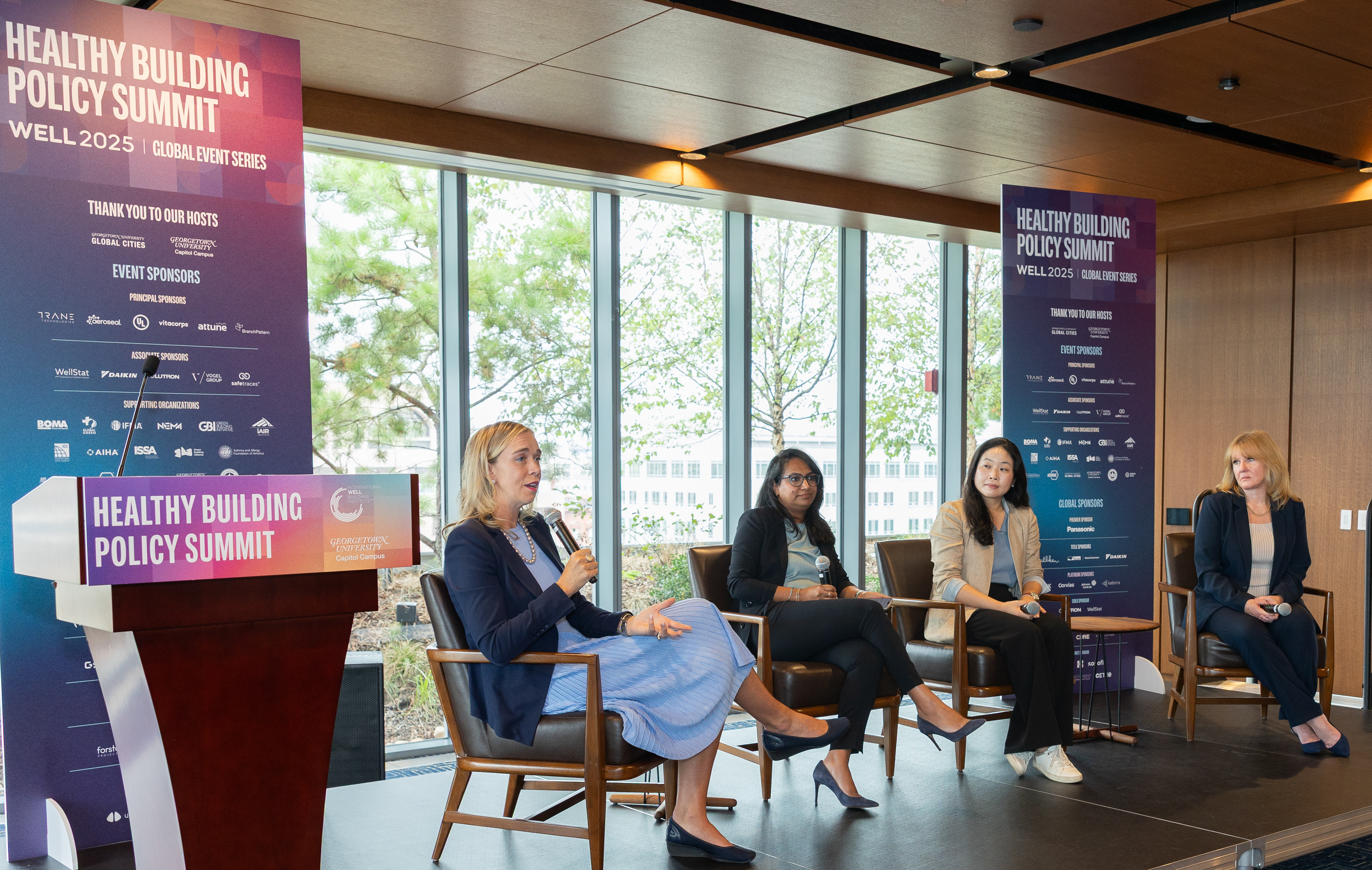
Chung and Almomen highlighted how design and technology can help ensure health results. Chung spoke about how HKS has integrated WELL principles into offices and other client projects to improve everything from indoor air to light to acoustics. Almomen discussed how better indoor air quality in schools supports children’s health and learning. Together, the speakers showed, unequivocally, that health-centered design is a smart investment that drives positive health outcomes along with increased productivity, improved satisfaction and well-being and organizational resilience.
Fireside chat: built for health — the path to scale
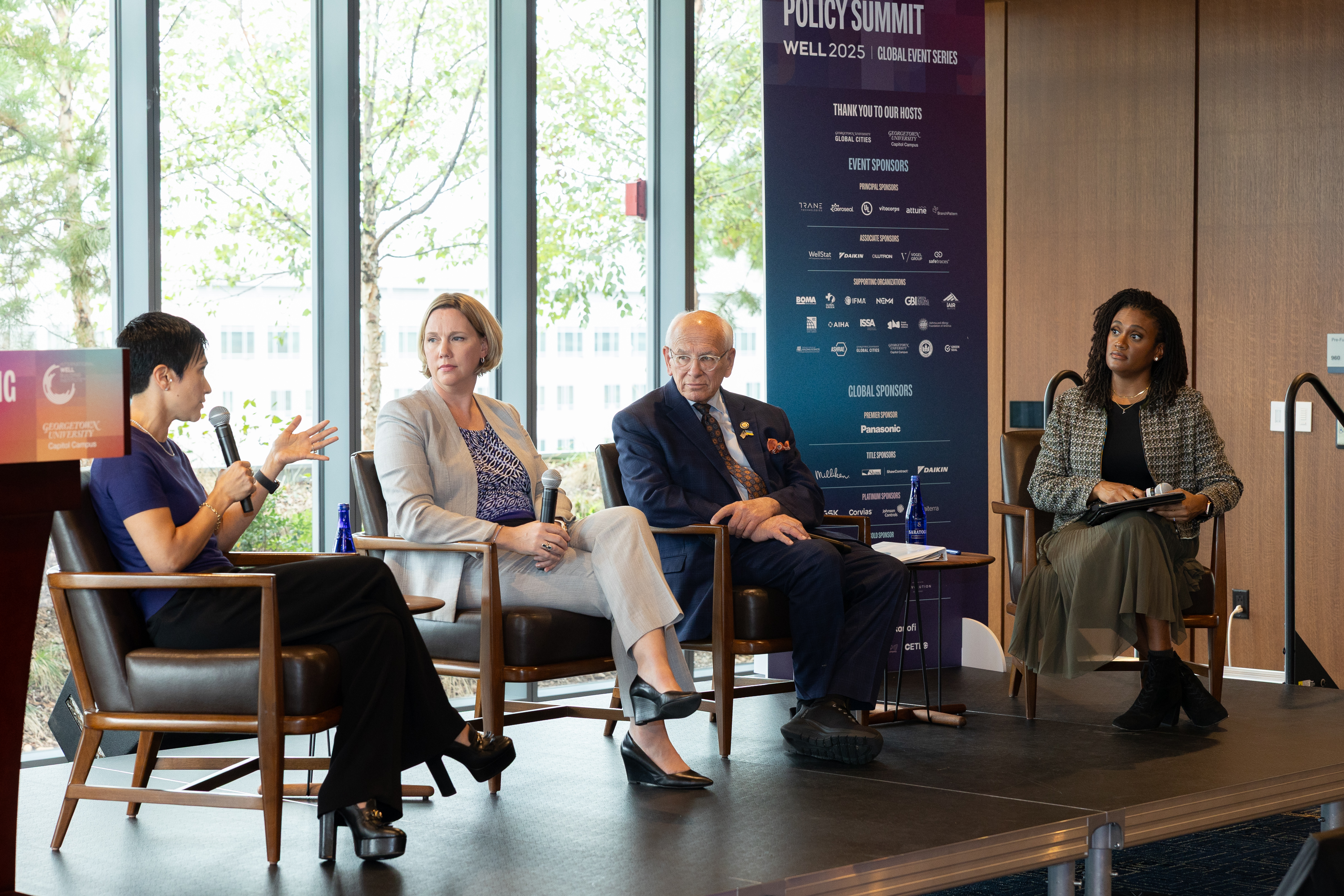
In a fireside chat moderated by Erin Billups, national health reporter at Spectrum News, Rachel Hodgdon, IWBI President and CEO, Amber Mulligan of Trane Technologies, and Congressman Paul Tonko, (D-NY), discussed how buildings are becoming vital to human health, productivity and sustainability. The conversation highlighted the urgent need to prioritize indoor environments and then each panelist shared their stories and perspectives, illustrating real-world benefits, from reducing asthma in schools to improving workplace performance in business. Together, the speakers demonstrated how technology, policy and advocacy can and should work hand in hand. Moreover, by utilizing tools like WELL, organizations can make improvements across portfolios, scaling these health interventions and supporting public health priorities.
The importance of combating the status quo:“Shifting mindsets and demonstrating the evidence of how buildings impact health is the first step toward scaling healthy building practices.” - Rachel Hodgdon, President and CEO, IWBI
Marrying sustainability and health: “Electrification and smart building controls not only improve indoor air quality but also provide measurable economic benefits, making healthier buildings a win-win for people and organizations.” - Amber Mulligan, Vice President of North America Commercial Services & Sales, Trane Technologies
Prioritizing our schools: “Investing in cleaner, healthier school buildings saves money in the long run and directly improves children’s health, attendance and academic outcomes.” - Paul Tonko, U.S. Member of Congress, D-NY
Leading by example: how the private sector is raising the bar on healthy buildings—and what key policies, incentives and approaches can help scale market adoption
In a panel moderated by Dr. Chris Pyke, Ph.D., chief innovation officer at GRESB, JLL’s director of sustainable buildings Tanya Eagle, Wendy Feldman Block of Savills, Jennifer Berthelot-Jelovic of BranchPattern and Dave Wildman of Bloomberg’s Workplace Infrastructure & Sustainability discussed how the private sector is driving innovation in workplace health and well-being. Panelists shared what motivates them—from human-centered sustainability and occupational health experiences to operational challenges and early WELL and LEED projects. They highlighted how technology, including AI and air quality sensors, along with portfolio-level planning and advocacy, is helping businesses adopt health-focused strategies ahead of formal codes.
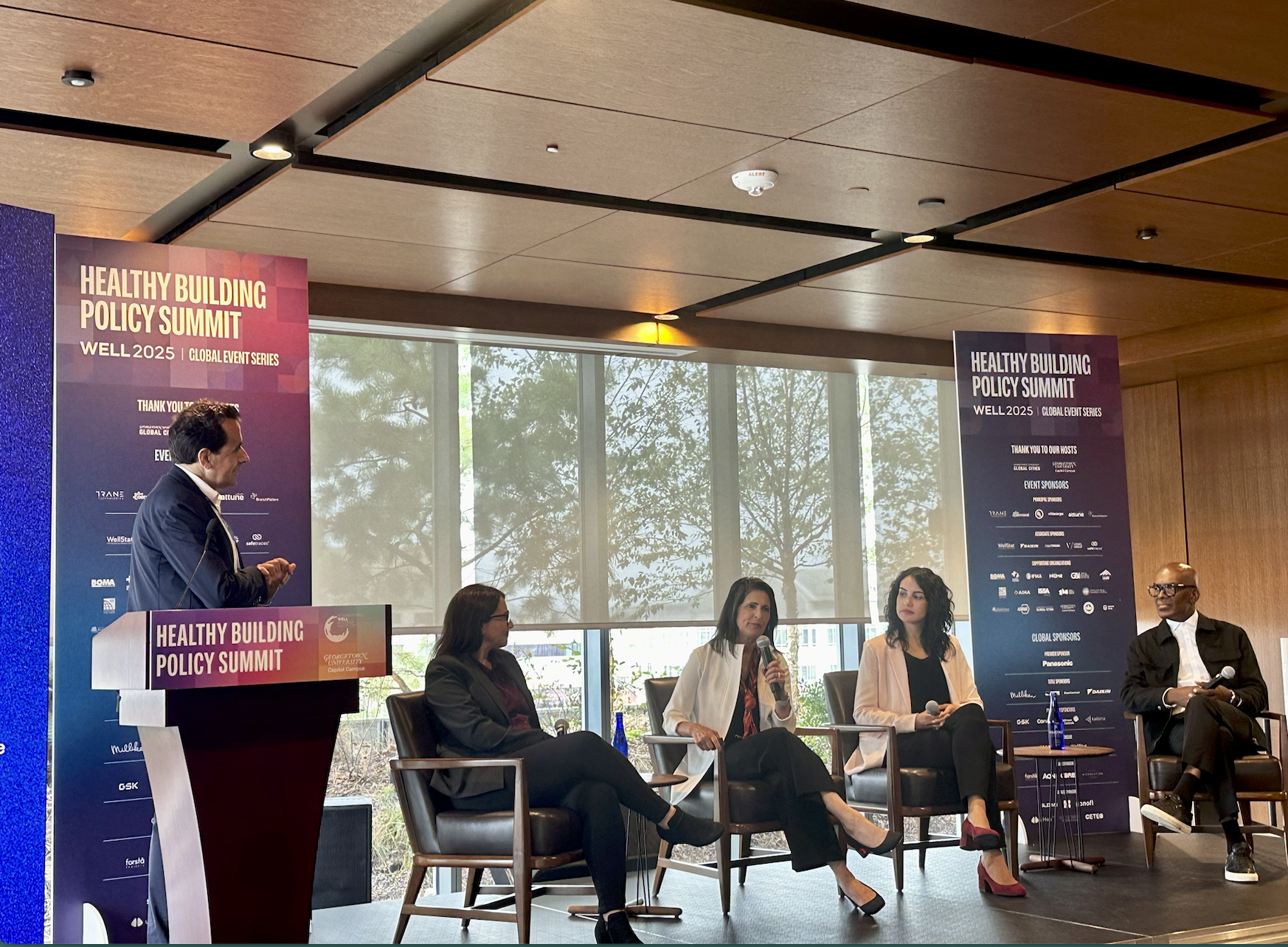
Speakers emphasized that making health and wellness in buildings visible and nonpartisan is key to accelerating adoption, while acknowledging that smaller organizations and under-resourced sectors face barriers to access. They agreed that scaling requires benchmarking, data transparency, inclusive design and supportive policies that treat health as a fundamental standard, similar to fire safety codes. Across sectors, the panel underscored that intentionality, clear communication and measurable metrics are essential to embedding health, well-being and sustainability into the built environment at scale.
Spotlight Conversation: an on-stage interview with ASHRAE President William McQuade
In a spotlight conversation moderated by BuildingGreen’s editor-in-chief Erika Heet, ASHRAE President William McQuade detailed the organization’s 2025–2028 strategic plan, emphasizing the central role of healthy, sustainable buildings designed for people. He highlighted that indoor environmental quality (IEQ)—including air, thermal, acoustic, lighting and water quality—directly impacts health, productivity and long-term societal costs, and stressed that proper design, maintenance and operation are critical for lasting impact.
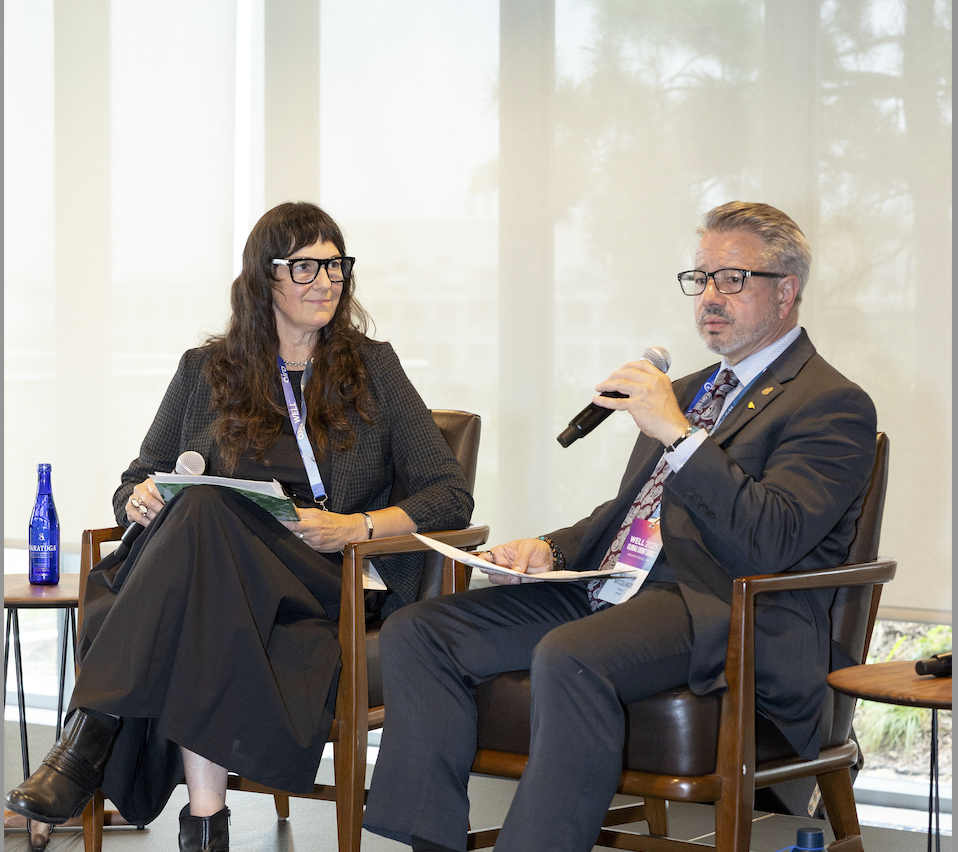
McQuade also discussed ASHRAE’s standards, global adaptations, and cross-sector collaboration to advance healthy building practices worldwide, noting: “The cost of good indoor environmental quality, where people can stay healthier and in their homes longer, has great effects on the overall cost of healthcare in our country.”
Smarter, healthier, faster: unleashing innovation to propel the healthy building movement
This panel was moderated by Cameron Oskvig of National Academies of Sciences, Engineering, and Medicine. Experts on the panel explored innovations and strategies to accelerate the healthy building movement, emphasizing cross-sector collaboration to translate science and research insight into real-world impact. Panelists underscored the role of knowledge-sharing and amplifying novel research, exchanging best practices, and identifying future activities that address building impacts on human health and well-being.

Speakers shared both personal and professional perspectives on indoor environmental health. Trisha Miller of Aeroseal described living in a mold-affected home, showing how building issues directly affect families, and stressed that policy must translate solutions into action while building technologies make health-focused strategies more accessible. Jessica Green of the Resilient Systems Office at the Advanced Research Projects Agency for Health (ARPA-H) called for real-time monitoring of biological and chemical contaminants to optimize indoor environments. Vito Ilacqua, acting director of the EPA’s Center for Scientific Analysis, Indoor Environments Division, highlighted the need for large-scale, evidence-based studies linking building characteristics to health outcomes. The discussion made clear that advancing healthy buildings requires innovation, rigorous research, equitable access and collaborative action.
Local action, national impact: the role of states and cities in pioneering healthy building policy
In the final session of Summit moderated by Uwe Brandes, Director of the Urban & Regional Planning Program and Director of Global Cities Initiative at Georgetown University, experts explored how states and cities are leading the way in healthy building policy, demonstrating that local action can have national impact. Speakers highlighted strategies ranging from California’s indoor air quality guidelines and LEED-based health measures to interdisciplinary urban health initiatives, emphasizing that local governance, innovation and stakeholder engagement are key to driving meaningful change. The panel conversed around themes that included the importance of combining education, voluntary guidelines and enforceable standards—and framing health as a primary priority—each of which can help accelerate adoption and scale solutions from local experimentation to broader national influence.
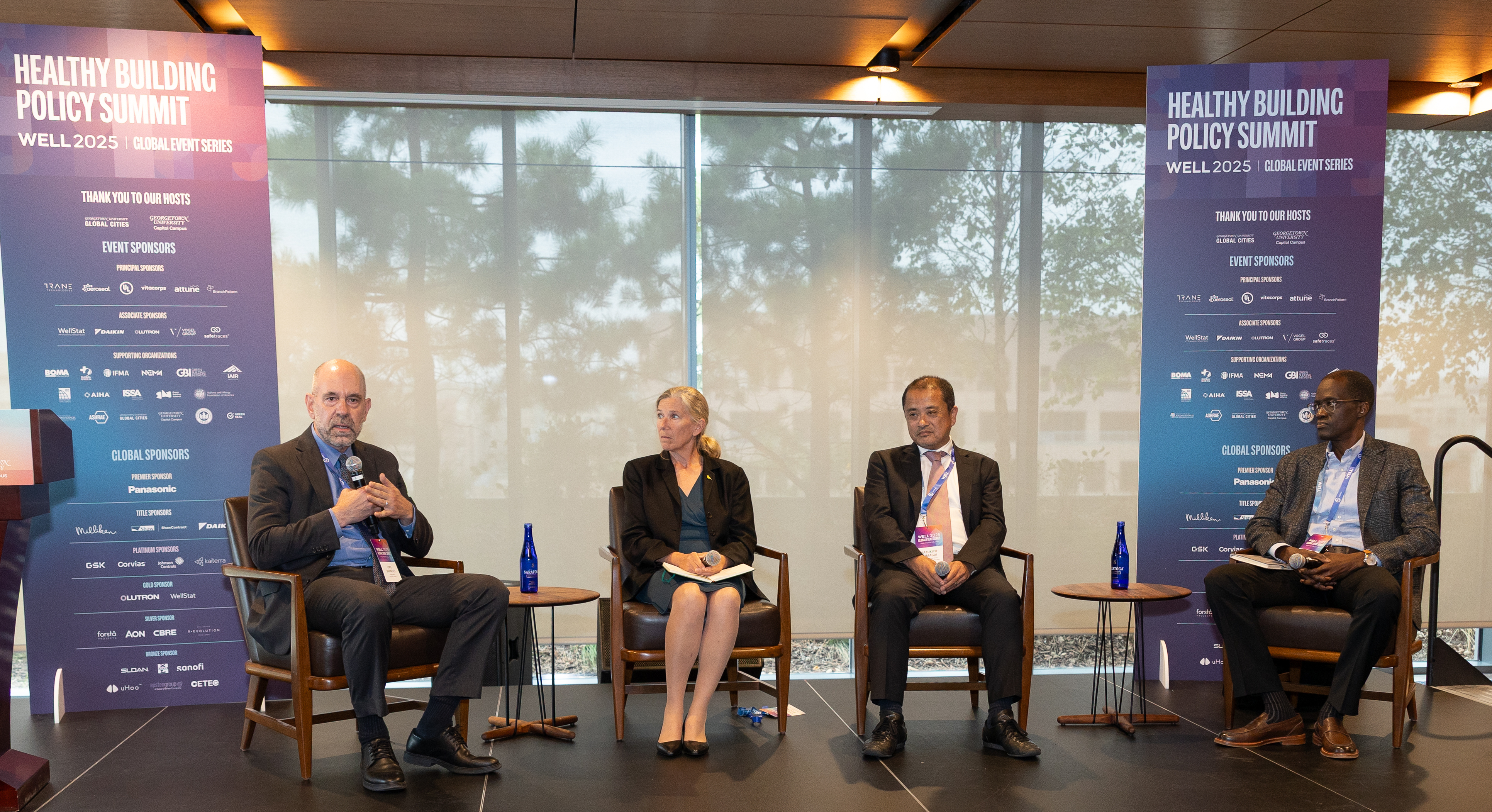
“Cities and states are where the permits are issued… it’s really important to understand where the knowledge is to effectuate the regulatory frameworks.” - Uwe Brandes, Director of the Urban & Regional Planning Program and Director of Global Cities Initiative at Georgetown University
“Large global corporations as occupiers—they’re very clear on their specifications and that drives action on better buildings generally.” - Elizabeth Beardsley, Senior Policy Counsel, U.S. Green Building Council
“The government is responsive once there’s pressure from the public… after COVID, we were tasked with improving indoor air quality so we don’t have to deal with another pandemic.” - Kazukiyo (Kazu) Kumagai, Chief of the Air Quality Section, California Department of Public Health
“Sustainability and health are interwoven… to make a tangible impact, you have to affect multiple industries at once.” - Seydina Fall, Senior Lecturer at the Institute for Planetary Health, Johns Hopkins University
Putting knowledge into motion
Attendees left the Summit with practical insights on how to turn ideas into action through a range of panel sessions that emphasized the need to shape policy, advance healthier building design and adjust organizational priorities. The conversations offered a clear reminder that improving health and well-being in our buildings starts with informed leadership and collective commitment.
Impact amplified
The Summit’s ideas are being amplified through impactful media partnerships and wide-reaching coverage. With support from FacilitiesNet, BuildingGreen and Buildings, the conversation around healthy, sustainable buildings is gaining momentum. Read more insights captured through on-site reporting:
- Healthy buildings mean strong ROI: IWBI Policy Summit
- Sustainable, healthy design choices should be visible
- IAQ doesn’t need to increase energy costs: IWBI summit speakers
- Exploring the critical role of policy at all levels of government in transforming facilities to improve health and build resilience
- Stirring Things Up on Indoor Air Quality
- Collaborative event that focuses on directing policy to create healthy buildings and healthier communities worldwide